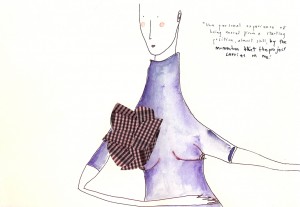
I have a nomadic vision and I believe that “home” could be anywhere and mean anything.
We are all traveling and travel presupposes a circular route-a going forth, a turning around, and a return-a search for ‘elsewhere’, and a homecoming.
I am constantly shifting.
I am always leaving one place for another, one which proves perhaps better than the first.
I left home (?) in search of personal expansion, education, and growth…and I travel to visit friends and family, to see the world, to run away, to rest, to think, to go away and to come back.
I am a foreign here.
I am a foreign in Brasil.
I have a foreign heart.
|
|
|
|
finally! …I’m just coming back home from the countryside!
…I feel so fortunate of taking part in this walk in the gray area!
…And I’m really amazed to have the opportunity to share this walk with you!
Like André Gide once said “One does not discover new lands without consenting to lose sight of the shore for a very long time.”… and I believe you can apply that for almost everything. Hi Gemma, 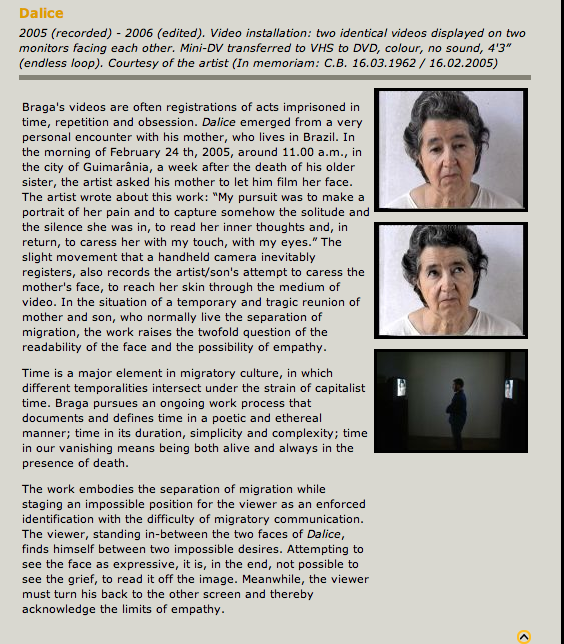 Video Installation
Dear Célio, Thanks for your beautiful letter. I have been living with the printed version of your letter for some days. It’s laying on my worktable, taking the space of one unfolded sheet, and displaying a square of black traces within a bigger white square. It was a very suitable first letter. That’s the feeling that I had while reading it. This letter is a real letter. This blog seems a great river to me, and now, somehow, I need to find my (provisional) way to plunge into it. While I’m looking the water following its own direction, it comes visible to me the texture of time. Here I’m, mesmerized by the flow, knowing that the entry door will appear only with the decision to jump into it, but still trying to do so in an accurate way. “The use of the term horizon is attested from the second half of the 13th century. At first the word signified ‘limit’, the limit of the gaze, the limit of sky and earth…The conquest, through the discovery of mountain landscape at the end of the 18th century, of higher and higher view-points, moved the horizon further and further back, until it vanished into infinity… …’horizon’, which originally meant a limit, the power of circumscribing a place, came to mean immensity, infinity – such as the limitless horizon of the ocean… Then beyond the horizon, in the imagination, appear Utopias… But at the very moment that I look at the map – when I follow with my finger the route of a road, a contour-line, when I cross here and not there a frontier, when I jump from one bank of a river to the other – at this very moment a figure is extracted from the ground and the map, the figure of a projected journey, even if it is an imaginary one, a dreamed one. With that figure, a narrative begins, with a before and an after, a point of departure and a point of arrival, a happy coming-back or a final permanent exile. The locus has become space: directions, speeds, travel, timing give motion to the map with the tracings of various routes’ Exceperts from Louis Marin, ‘The Frontiers of Utopia’ “So that what we are really doing when we walk through the city is thinking, and thinking in such a way that our thoughts compose a journey, and this journey is no more or less than the steps we have taken, so that, in the end, we might safely say that we have been on a journey, and even if we do not leave our roon, it has been a journey, and we might safely say that we have been somewhere, even if we don’t know where it is” “In my best moments I think, ‘Life has passed me by’ and I am content. Walking seems to cover time and space but in reality we are always just where we started. The ocean is deathless I wish the idea of time would drain out of my cells and leave me quiet on this shore.”
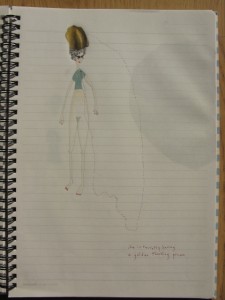
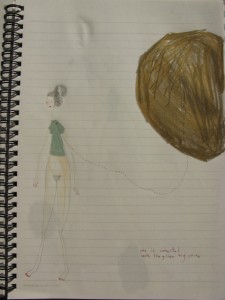
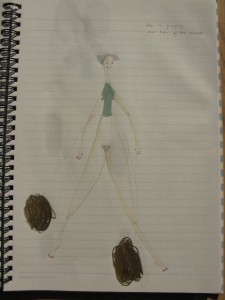
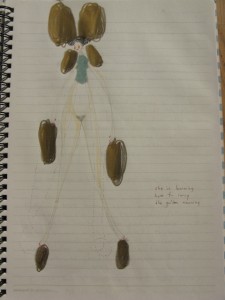
. . . these drawings are from few weeks ago… I was triyng to explore in a almost cartoon-superheroe way how messy the valuable can be…
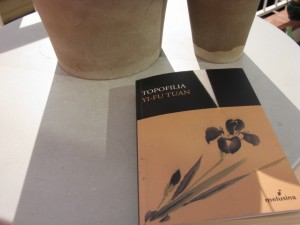
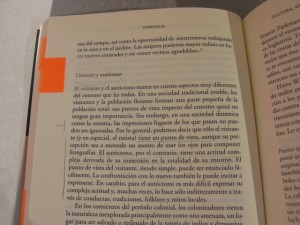
visitor and native.The visitor and the native takes into account many different aspects of the environment around them. In a traditional stable society , visitors and the foating population are a small part of the total population: their views on the environment may not have great importance. However, in a dynamic society such as ours, fleeting impressions of those who pass can not be ignored. Usually we say that only the visitor (and especially the tourist) has a point of view, although their perception is often a matter of using his eyes to compose pictures. The native, by contrast, has a complex attitude derived from the total immersion environment. The visitor’s standpoint, being simple, can be set easily. The confrontation with the new can also induce expression. But for the indigenous is more difficult to expresshis complex attitude and often does so only indirectly through behaviors, traditions, folklore and local myths.…I’ve been spending some time reading and listening to people trying to share thoughts, think structures, constructions to shelter meaning… Around 1960, Yi-Fu Tuan invented a word to represent or to name the attachment to a place: TOPOPHILIA. I don’t know if we can still take this labor-thought effort and use it to cover our current reality… After the disappointment of tourism taken as one of the fine arts, and the global blowing up the idea of distance into thousand digital pieces, who can still strictly say that his/her identity feeds on the condition of belonging to a land-place without carrying in his/her pockets sand from foreign landscapes? Those crossing borders, where they keep the magic amulet giving the unexplored place under their feets the quality of being a passable place? Or then, those crossing borders they lose this need to belong to the place where they are?
|
  |
|
Copyright © 2026 Otro Diseño | RSS |
|