Auli Laitinen
My work is my questions to others and myself. When the questions are difficult I need to think together with other people! This is why I like to see my jewellery as conversation pieces. I was born in Stockholm, Sweden, where I also work. My parents are from Finland and Madagascar. I have lived and studied a while in France and America, where I also have worked.
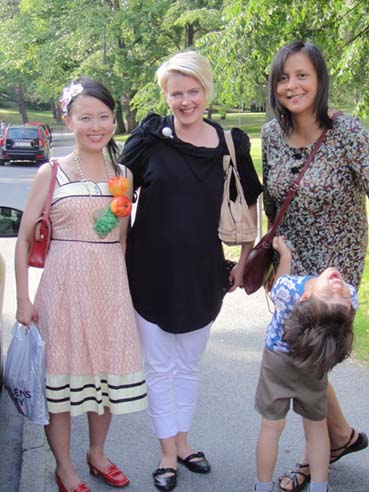
Charlotte, Annika me and Jeppe, beloved persons in life and studio.
Auli Laitinen
Hi there,
I think I have managed to make my first post here, the introduction…! This blog thing
is new to me, but I don’t seem to be alone from reading some of the other comments.
I think we might have before, have we? Maybe briefly at RISD? Anyway, looking forward working with you.
Let’s get the technique started and see where we can go from there!
Auli
I was born in Quito, Ecuador. My parents are from Panama and Ecuador. I love art in everyway so it was hard to choose a specific art discipline to follow. I studied interior design for a while in Buenos Aires, Argentina, then transfer back to Quito to follow graphic design, and finally felt in love with jewelry and decided to transfer to RISD in Providence, RI, USA, where I recently graduated.
Hello Auli,
I can believe what a small world it is! I think I remember you, you where the exchange student from Sweden who used to do little cute resin animals if I´m rigth. Those really caught my attetion.
I´m excited to start working with you.
Auli Laitinen
it is..! I think you are thinking of Märta. I taught the wintersession class at RISD 2008 and I think we may have met somewhere around school.
Talking about work, I would not use the word cute to describe my work, but I would not object to funny…Humour is a good way to access some questions. I find it hard to aim for it but when it appears in the working process it is usually a good sign!
I usually have an issue/problem that is bothering me and that I feel very challenged to transform into something wearable. The wearable aspect of our art is quite intrinsic to me, how do you think about it?
Auli
Auli,
You used the word “intrinsic” to describe wearability of our art, 1 a : belonging to the essential nature or constitution of a thing <the intrinsic worth of a gem>; when transforming your problems into something wearable, will the problem stay in the piece and be handed to someone else? will it be a problem for the wearer to wear a “problem”? What do you think about creating a problem for others?
To me wearability is quite interesting, giving expressionism to the piece. I like my pieces to be wearable but yet challenge the wearer, making them spend a little more time thinking “how do I wear this?”. I like to create unusual ways of wearing my pieces because I believe it creates an interaction between the piece and the wearer. This interaction transforms the pieces, becoming more than just a adornment on the body, but more like part of your body. Its like having an intimate secret with the piece, once you break the “challenge” only you know how it works on your body. I also like to create interaction by giving movement to my pieces, so that the wearer can interact with it in a tactile way too. This interaction can be a playful and pleasurable experience. How do you feel about interaction between wearer and piece?
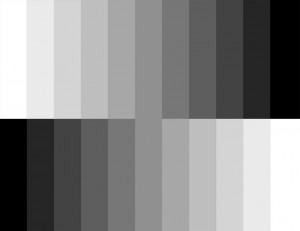
I was thinking how will it fell to be walking the gray area, but what is a gray area?
- Grey area of ethics signifies an ethical dilemma, where the border between right and wrong is blurred. Example: is killing always abominable?
but it can also be a gray area like an area of several shades of gray starting from point A (white/light) to point B ( black/dark), each shade has a different light source,
- Shading is interpolated based on how the angle of these light sources reach the objects within a scene. Of course, these light sources can be and often are combined in a scene.
Could we be considered point A or point B and create bridge of shades between us? Transforming our black into white and white into black, our dilemmas? How does our light sources differ and manifest? What thoughts come to your mind?
Auli Laitinen
My immediate thoughts are that the ethical dilemmas always are the most interesting ones. Those questions holds so many of the ingredients that are forming us as human beings. And there is no end to it either, the questions needs to be asked and responded to, over and over again.
For exemple, I am not using very much gold in my work but with the recent years awareness of environmental issues and war financing mining I don’t think I could make work without addressing the issue somehow. I would like to use certificately assured gold because it wouldn’t be coherent with my way of working to do otherwise. I have not thought about it very much before but if I think about how I work I use and count in a lot of meaning and values in the materials I use so it would be kind of illogical to ignore this information. The same way I “use” the idea and image of the tie as a mainly masculine attribute transferred by the tie fabric and patterns in some of my works, I might have to acknowledge that gold carries attributes that are heavier than the conventional idea of status and wealth…
I think that the different meanings of shading you mention goes very well with the theme of our blog. All connecting words, shattering, nuances and shading are saying something about the conditions of a migrant, good or bad! They can represent different angels of finding yourself in a new culture, understanding it and maybe longing to be understood within it.
When I say that wearability is intrinsic to how I work with my jewellery it is because it says so much about the frame I am working within. To picture a person wearing the jewellery and the reactions towards or with that person…Most of all it is how I read jewellery, who wears it? where? Do I want to wear it? And most important of all is the connotation of jewellery being a beautifying object, something that the wearer is proud of or somehow eager to show to others. This idea is something I very much count on while working. I am counting on that a wiever always has it in the back of hers/his mind when looking at jewellery. I do NOT mean that jewellery has to contain any of these qualities/ideas, only that they are constituting the back drop to how we read the work. That our concept of beauty and status differs between cultures is no news therefore I cannot claim another frame than the western world, specificly the north European one…
Considering what I just wrote there will always be a problem for a wearer to wear a problem! That is exactly the reason why I continue to work within the field of jewellery, because this is such a challenge. How can I part from an issue that is problematic and make it in to something a person wants to wear?
I think I will stop here for now and await your comment, looking forward!
Auli
I find ethical dilemmas interesting as well since to me its the moral part the one that enters the gray area the most. Our shades are seen through our emotions, our emotions depends on our acts, which are determined by our moral (right vs wrong) I feel like when you enter a gray area your are like a soldier entering a war, a war of emotions, dilemmas, moral values, courage, pain, pleasures, and all these ingredients and many more are forming a soldier stronger than before. Or a SOULDIER as I like to think about it , which fights for your soul feeding it and letting it grow.
I think material definitely constitute a lot of value to a piece, speaking out to the public. As you mention the ethical problem with gold, I often think about how nature is been abused everyday. But we can do something about, let our jewelry speak. Recycling/found materials interest me a lot, they already have a history, a function, they belonged somewhere or to someone, so there is a story behind them, that tells about a culture. So is the perspective in which you see the material, an angle that can be framed by you, a shade of yourself in a new culture. The idea of using existing things to create something new, out of the ordinary fascinates me.
Regarding wearability, I believe the reason why people like to wear jewelry is to get some kind of benefit. Either is attention, admiration, honor , status, beauty, pleasure, distinction, interaction. The more benefits it gives the wearer the more they will like to wear it. How many benefits can a problem bring?
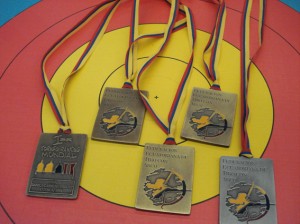
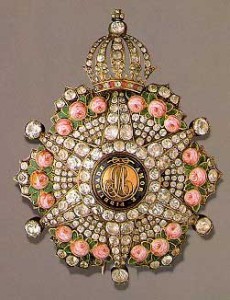
For example, taking my previous example of my souldier. What if we consider jewelry like medals, or con-decoration. Jewelry can be use as a victory, problems are solved and once you solve it you get recognition, giving self motivation, admiration and self- satisfaction. Now you could even help others.
Auli you have very interesting ideas, I’ll love to see some of your work do you have a website? Hope everything is good in that side of the world, greetings from here. You can check my work at www.mariajosefabrega.com.
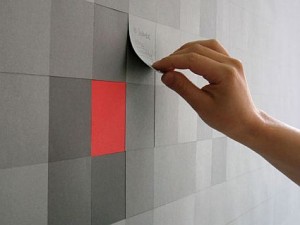
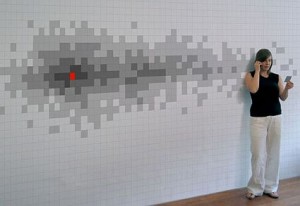
“Had I not been subject to darkness, I could not have seen the light”
I found this quote which I feels it relates a lot with migration, the gray area and shades.
I haven’t hear from you in a long time, is everything okey?
Auli Laitinen
Hi Maria,
I am sorry not to have posted something in a while. I am trying to get my self together. We have lost our friend and studio collegue after some time of illness and I am taking things slowly. I will return as soon as possible.
Auli
Auli Laitinen
hi Maria, I am sorry not to have posted something in a while. I am trying to get my self together. We have lost our friend and studio collegue after some time of illness and I am taking things slowly. I will return as soon as possible. Auli
accidently I didn’t post this at the right page so I am reposting it here to you.
I completely understand, I’m sorry to hear that! I hope you get better soon!
Hey Auli, how are you doing? hope your are felling better…..lately I’ve been thinking about shades, shade of life, shade of light, big shades, levels of shades, emotional shades, …. how many meanings can you find, what do you think of the word shade?
Hi Maria Jose!
I am here. We can start now!
Agnieszka
From January 2010 I am new blogging partner of Maria Jose Fabrega. My name is Agnieszka Knap and I was born in Poland. Since more than twenty years I live and work in Stockholm, Sweden.
Dear Maria Jose,
Interesting thoughts in your email! When I think about migrating they are two words, which immediately come to my mind, pain and loss. Even though they are some good sides of moving, changing a country and adjusting to a new culture always contains a sacrifice. I am not sure if I would be able to do it again today, maybe if I’ve got an offer I could not resist or if the life of my family would be in danger.
I really enjoy travelling but travelling is not migrating. My migration cost me a lot of effort and undoubtedly had a big impact to who I am today. I do not compare these two cultures (Swedish and Polish) anymore. I just try to understand what it is in front of me, stay open (not easy!) and in the end find out if I want and need this in my life or not. Having access to two cultures gives you simply a bigger field of vision. When things became too blurry you can always choose another pair of glasses.
Just a week ago I still was in Poland to visit my family. There is always the same strange feeling appearing, nobody can question my presence there. It is pleasant and painful at the same time. It contains a paradox as well. I was born in Szczecin (Stettin) a city, which belongs to Poland for only sixty years. Until 1945 the city was German and my mother’s family moved there in 1946 as many other families from the central Poland and eastern border with hope for a better life. A house in which I grew up as little girl belonged certainly to a German family who had to leave the place to save their lives. My place of safety is somebody’s loss and pain.
Probably most people on this blog like you and me could choose when and how they moved. This is a luxurious position. I had that privilege too but in 1985 when I emigrated for many persons in Eastern Block it was only a dream and it is still for others in the world today.
Welcome to the blog Agnieszka! I’m glad to have you here, now we can start really working.
I agree migration most of the times brings loss and pain, but it also brings strength and satisfaction. As you mention we are lucky to be able to create our way toward our dreams, by choosing where to go and why. Other people have to go though a lot of things to just to reach other country. “When things became too blurry you can always choose another pair of glasses” I really like the way you said this. I believe everyone who wants to migrate is always looking for a better opportunity, the dream life. But its not always bright, migration has its dark side as well. We pass through a degrade of emotions like a gray scale all the way from black to white, all shades are different. Everytime I migrate I feel like a soldier on a field hoping to have good luck and give the best to survive. The first time I ever went away from home to Buenos Aires I missed everything too much and I returned home after months, right then there was a part of me that waked up and was starving of curiosity, to see what other people have, do , don’t , think, etc. and the possibilities are endless. And so this new possibilities are the one that make me wanna migrate as much as I can during a period of my life. But I think it is always important to have someone you know near you, or at least near enough to visit, because being completely by yourself could turn catastrophic. Now a days its easier with technology , you can be closer to so many people at the same time, millions of km away, its really amazing, it perfectly fits the lifestyle of the people in this world now a days. Somehow we are all connected.
Dear Maria,
Time is going so FAST! Unfortunately I have problems with uploading images. So it will be only text this time. I will mail pictures to you.
The grey area is a condition or a place, which I do not feel comfortable to be in. It is not a place where choices are easy. The first picture comes to mine mind is a border zone, a danger place to be depending on circumstances. Borders are interesting, how do we define them, when they start and end?
Looking for images for borders I found interesting work of Francis Alÿs a Belgium artist living and working in Mexico City.His project Sometimes doing something poetic can become political and sometimes doing something political can become poetic, The Green Line. 2004 -2005 creates an interesting view on borders. The work is about the Palestinian and Israeli conflict but I think it contains some universal values and many layers.
In June 2005 Alÿs walked from one end of Jerusalem to the other carrying a can filled with green paint. The bottom of the can was perforated with a small hole, so the paint dripped out as a continuous squiggly line on the ground as he walked. The route he followed was one drawn in green on a map as part of the armistice after the 1948 Arab-Israeli War, indicating land under the control of the new state of Israel. The original Green Line has since been considerably altered on the ground, with cataclysmic consequences for people on both sides.*
*http://www.nytimes.com/2007/03/13/arts/design/13chan.html
Alÿs performance was filmed and shown at galleries to people with different backgrounds as a departure of discussion. Reactions were of course very diverse!
I found this comment about Alÿs action on:
http://simonsteachingblog.files.wordpress.com
“‘It’s also really wonderful because sometimes we get locked into how we see. It is a problem that the world doesn’t hear our story [the Palestinian story], isn’t it? Or our story gets manipulated, and turned on its head, but there is also a problem that we become stuck in the ways that we see things over and over again. So it’s also really wonderful to have somebody coming who is not coming to aggressively say who we are, or what things are, but is making an empathetic act, and at the same time is pushing us to maybe see things or to think about things in different types of ways. And the other part of it, I think, is that things here are so saturated and over determined in terms of representation and discourse, power and politics, that it’s extremely hard to find a way to break through that, in any way. I think poetic acts are one way of breaking through that.’
So the question is how can our collaboration (in the grey area) turn in to that kind of result, poetry and politics is this a good way? How can we create work, which makes difference, invite to dialog, open our mind and others?
Agnieszka
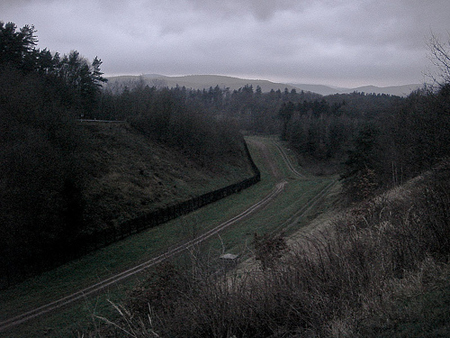
border zone
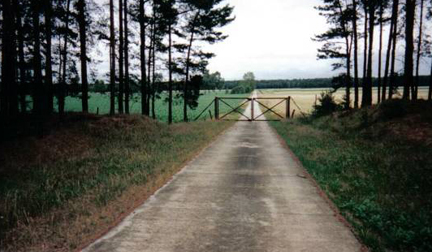
when a border starts and ends ?
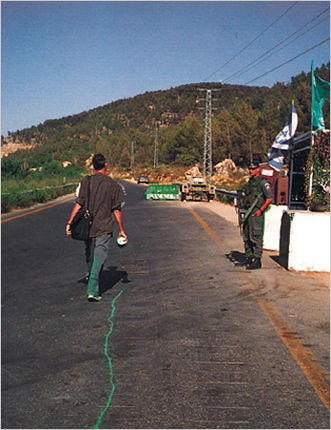
Sometimes doing something poetic can become political and sometimes doing something political can become poetic, The Green Line. Francis Alÿs
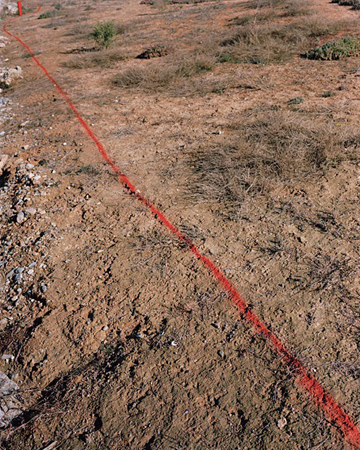
Corinne Silva, ‘Demarcation line number 3, Desert Springs golf resort’ 2009
Maria!
Here are the pictures I wanted to show you.
Agnieszka
|
|